Most dancers try to count the music. But counting is the result of hearing, not the start of it.
01Stop counting first
A salsa song isn't one sound. It's several instruments talking at once, and each one says something different. A dancer who says “I can't find the one” is usually listening to the wrong instrument.
The idea here is to listen in layers, not all at once. Once you recognise one layer, the others start to settle around it.
02The layers
- ClaveThe skeletonA two-bar rhythmic pattern, either 3-2 or 2-3. You won't always hear it clearly, but every other instrument plays around it.
- CowbellCampanaIn the busier parts of a song it plays the beats plainly and clearly. Usually the easiest place to find the one.
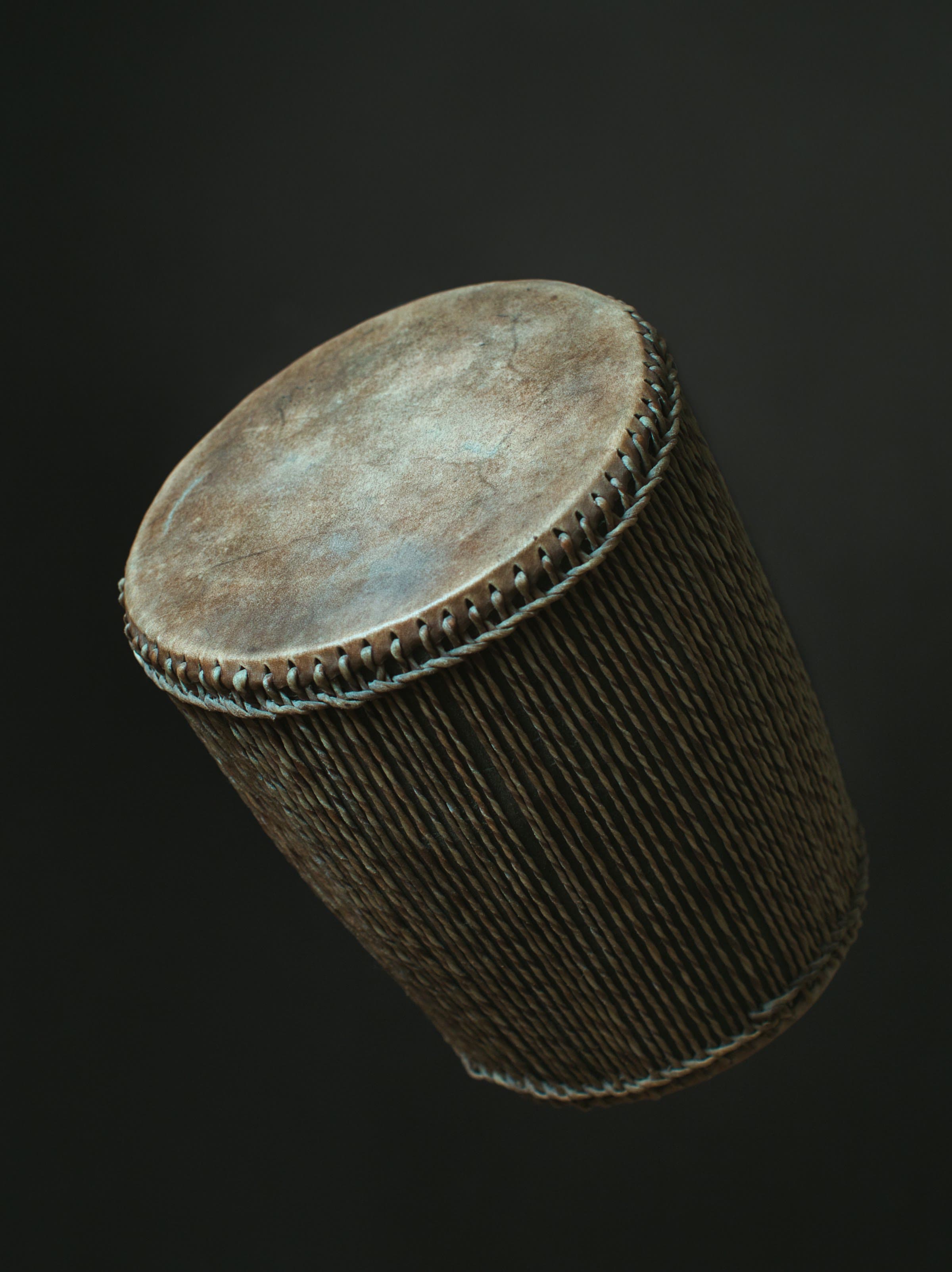
- CongaTumbaoThe short, sharp slap tends to land on 2 and 6; the open, round tones on 4 and 8. On2 dancers break with that slap. On 4 and 8 the basic step doesn't transfer weight; at an advanced level those open tones are an invitation for taps, kicks and syncopations.
- BassTumbaoIt anticipates the beat, on the “and” of 2 and on 4. Much of the forward push you feel in salsa comes from here.
- PianoMontunoA repeating figure that carries the texture and energy of the song.
03Beat map
The table shows roughly where each layer stands out across an eight-count phrase. Every song is different; treat it as a starting point for your ear.
| 1 | 2 | 3 | 4 | 5 | 6 | 7 | 8 | |
|---|---|---|---|---|---|---|---|---|
| Dancer (On2) | ● | K | ● | - | ● | K | ● | - |
| Cowbell | ● | · | ● | · | ● | · | ● | · |
| Conga slap | ● | ● | ||||||
| Conga open tone | ● | ● | ||||||
| Bass | + | ● | + | ● |
04Rhythm lab
Now hear the table. Press “Play”, then switch instruments off and on one by one: listen to the cowbell alone, then the conga. Switching between On1 and On2 moves where the break lands.
Simplified teaching patterns. Sounds are generated in your browser; headphones help.
05The shape of a song
Most salsa songs follow a similar path: an intro, a verse where the singer tells the story, a call-and-response section between the chorus and the lead singer, and the “mambo”, where the horns take over. These changes almost always happen at the start of an eight-count phrase.
Hearing a section change is the most natural moment to change something in your dancing: your energy, your styling, or just your breath.
06A three-step exercise
- Listen to a song following only the cowbell. Don't dance; mark the beats with your hand and find the one.
- Play the same song and follow the conga. When you hear the slap on 2 and the open tones on 4 and 8, notice where your break and your pause sit.
- Note where the song changes section. Next time, deliberately change something in your dancing at those moments.